Section 01 · The Field E-01
The limit decides what ‘clean’ means
A result below the detection limit is not zero — it is “not seen by this method for this long”. Change the sampler or the duration and the same air produces a different sentence.
Read the entry →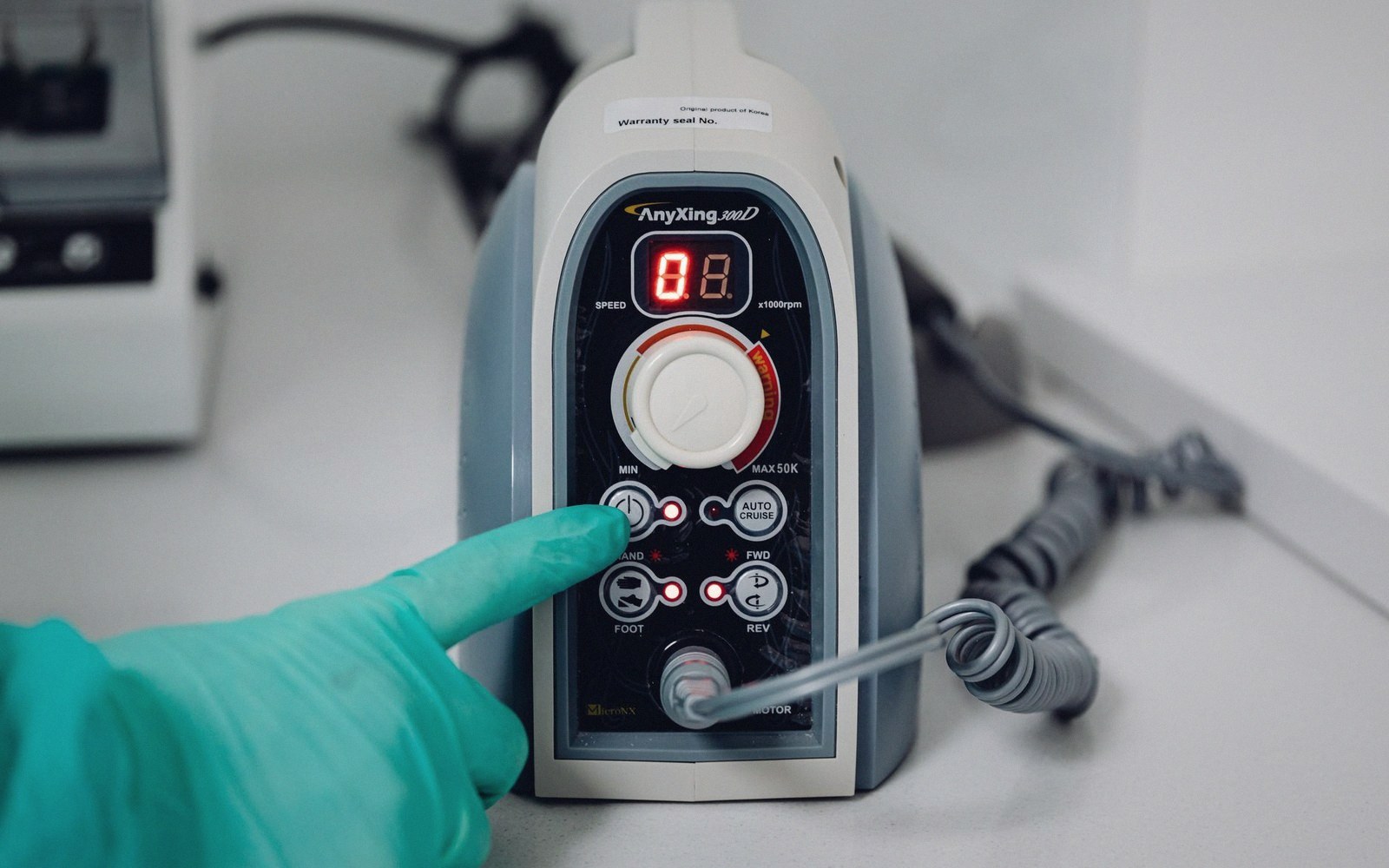
EACH ENTRY STATES THE METHOD, THE DURATION AND THE LIMIT IT REPORTS TO.
A RESULT WITHOUT THOSE THREE IS NOT A RESULT.
| No. | Method | Typical run | Reports as |
|---|---|---|---|
| M-01 | Diffusive badge | 7–28 days | µg/m³, time-averaged |
| M-02 | Pumped sorbent tube | 10 min – 8 h | µg/m³ |
| M-03 | DNPH cartridge | 1–24 h | µg/m³ |
| M-04 | Evacuated canister | seconds to 24 h | µg/m³ |
| M-05 | Emission chamber | 3–28 days | µg/(m²·h) |
A concentration describes air at a place and time; an emission rate describes a surface. The register keeps them apart on purpose.
Section 02 · The Chamber E-07
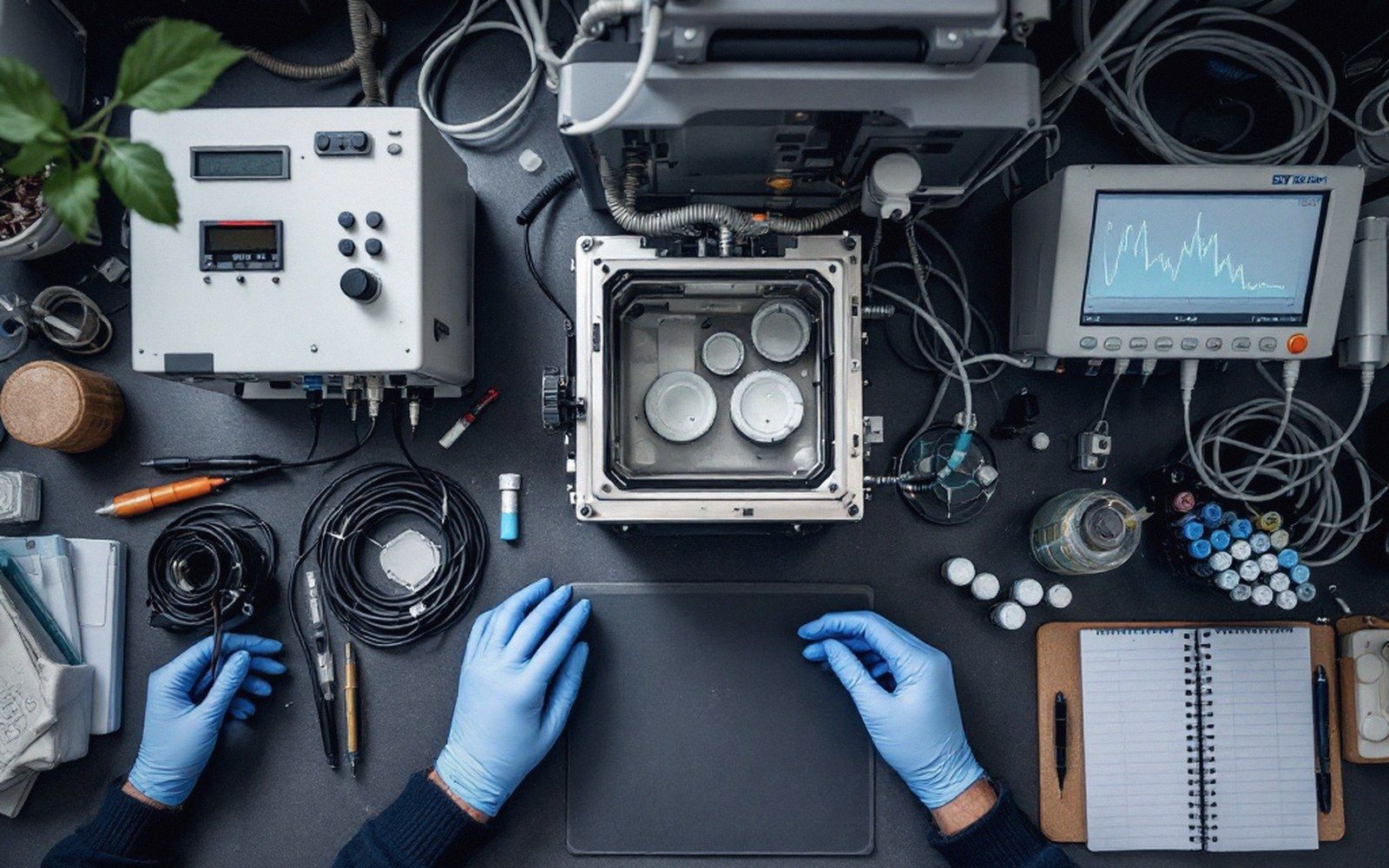
Emission in a sealed box
A specimen in a chamber with controlled temperature, humidity and air exchange, sampled at intervals to give a rate rather than a level.
From tube to number
Thermal desorption, separation, detection, integration. Four steps, each with its own way of being wrong.
THE BENCHThe paper chain
Registration, evaluation and authorisation: the sequence a substance moves through before anything may be said about it in commerce.
THE DOSSIERThe diffusive badge
No pump, no power: molecules arrive by diffusion at a rate the geometry fixes. Left for two weeks, it reports an average.
THE FIELD
The sampling plan
What, where, for how long and by which method — decided in writing before anything is opened.
Custody
The sample never travels unaccompanied. Every handover is signed and timed on one form.
Analysis
An accredited method, run with blanks and duplicates in every batch, on a calibrated instrument.
Validation
Recoveries, control charts and proficiency rounds — the laboratory proving itself against others.
The report
The number, its uncertainty and its limits printed together. Only this page may be quoted.
The regulatory version of this chain — E-17, The paper chain →
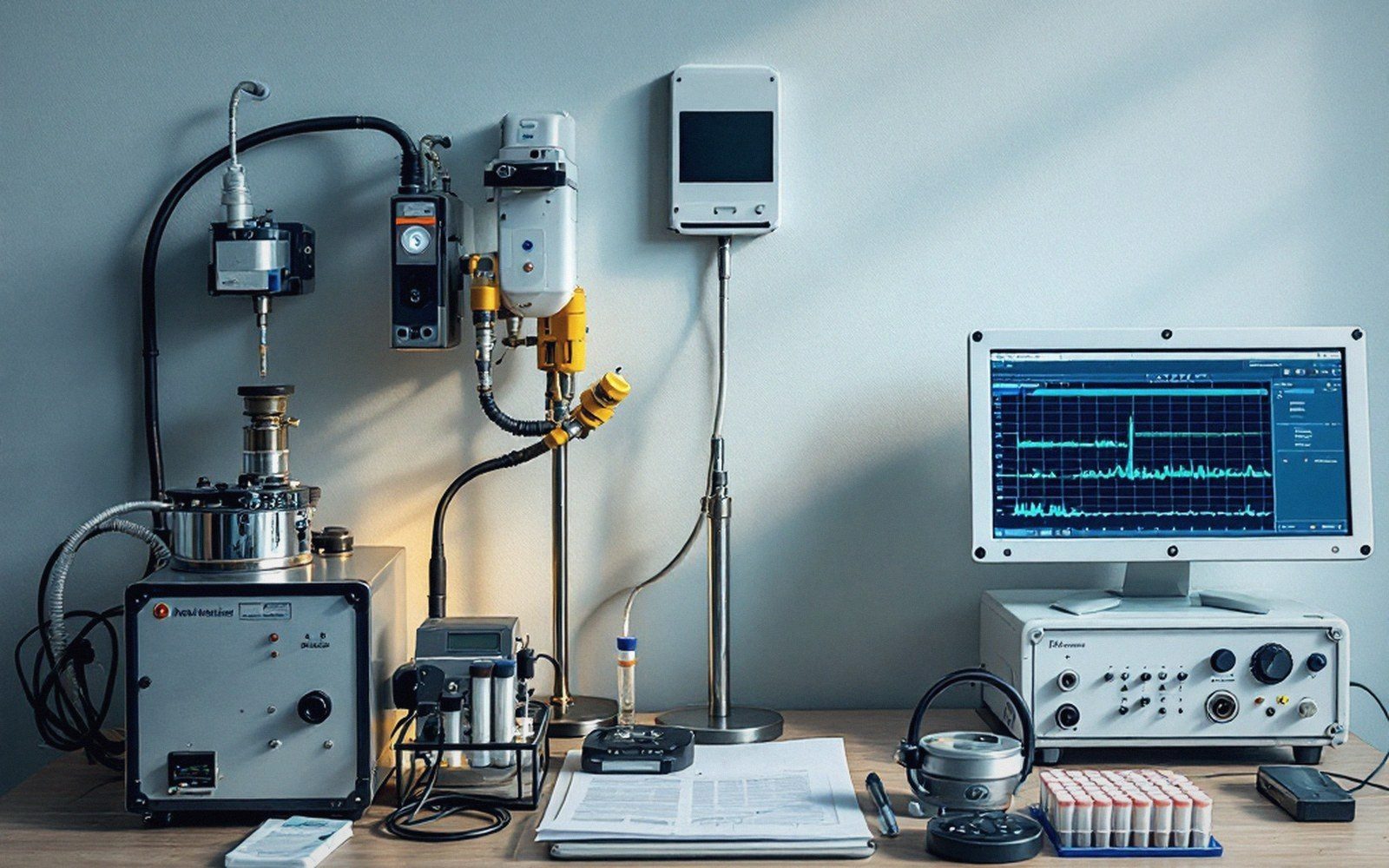
THIS PUBLICATION DESCRIBES INSTRUMENTS, METHOD AND PROCEDURE.
IT CARRIES NO HEALTH INFORMATION OF ANY KIND.