Section 01 · The Field E-04
Blanks
A sampler that goes everywhere and samples nothing. Without one, there is no baseline.
Why a Doing-Nothing Sampler Does Something
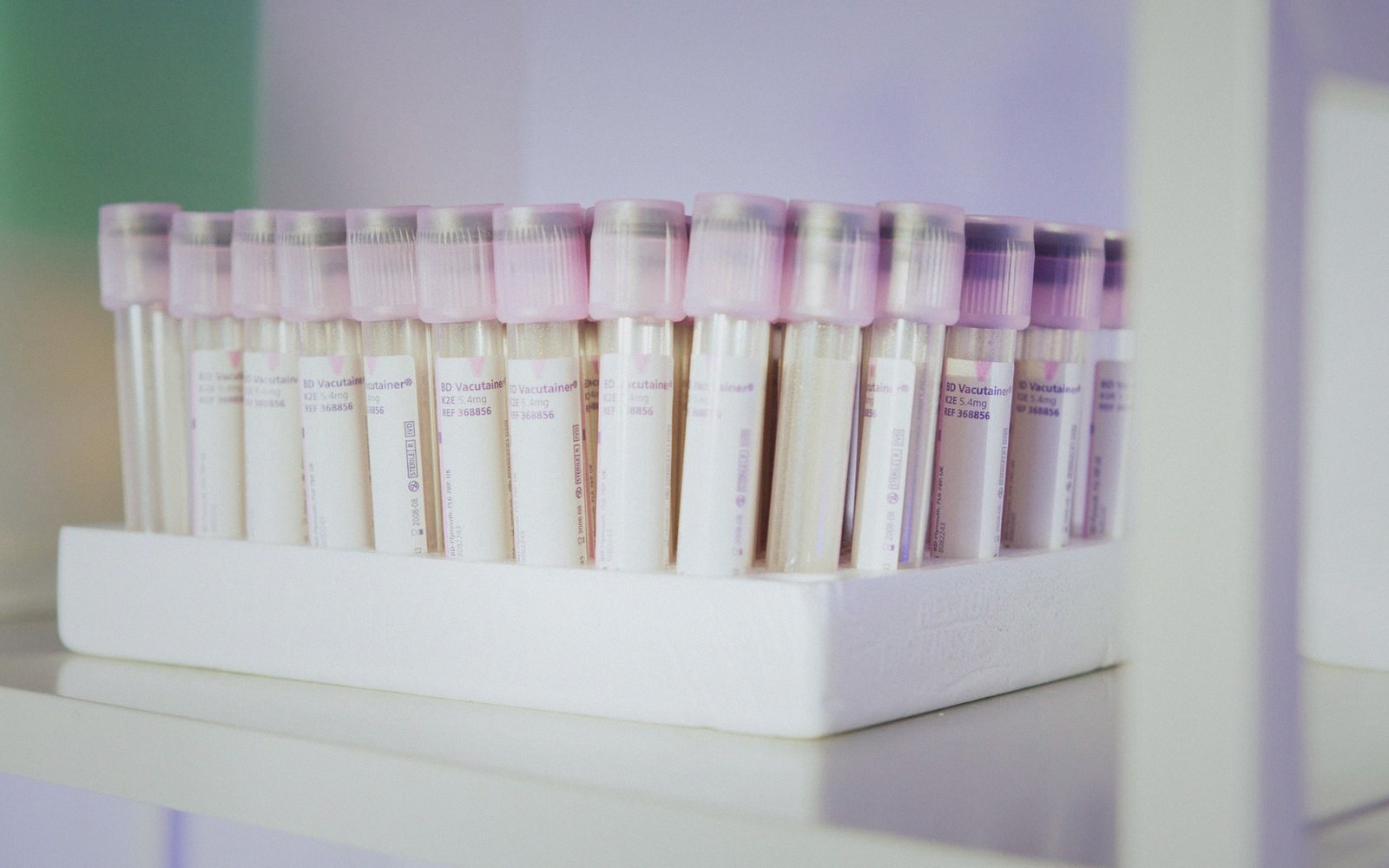
Every set of field samples travels with at least one sampler that is never supposed to collect anything. It goes to the site, survives the same journey, sits beside the working samplers for the full exposure period, then returns to the laboratory sealed — or, in the tighter protocol, it is opened at the site and immediately resealed, exposed to ambient air for the thirty seconds it takes to set up the real samplers. That distinction matters: a trip blank tests contamination picked up in transit; a field blank tests contamination picked up at the site itself during handling.
What the laboratory finds on a blank is not a measurement of the environment. It is a measurement of the method — of the sorbent's own background, the solvent used to condition it, the containers, the handling, and the analytical sequence itself. Before any result from an active sampler can mean anything, this background has to be known and subtracted. If the blank carries a detectable amount of a target compound, that amount is what the method contributed, not the air. A result that does not rise clearly above the blank level is not a result; it is noise wearing the clothing of data.
The number that comes out of this comparison is sometimes formalised as the method detection limit — the concentration at which the signal from a sample is distinguishable from the signal of a blank at a defined statistical confidence. The limit decides what 'clean' means, and blanks are what set that limit in practice. Run too few blanks and the limit is poorly characterised; run only laboratory blanks and miss contamination that happens in the field; run no blanks at all and every reported result is suspect.
Protocols for diffusive and pumped sampling typically require at least one field blank per batch — often defined as one per ten to twenty active samplers, or one per site visit, whichever generates more blanks. Regulatory and standardised methods, including those under ISO 16000 series for indoor air, specify minimum blank numbers and the arithmetic for subtracting their contribution. Some require the blank result to be reported alongside the sample result, not folded silently into the calculation.
The blank is also the audit trail's quiet enforcer. If a batch of blanks from a particular sampling campaign shows unexpectedly elevated contamination, the laboratory has to account for it — and the client reading the report has grounds to ask questions. A blank that is clean confirms the chain of custody held. A blank that is not clean does not invalidate the data automatically, but it demands an explanation before any number in that batch is trusted.
Filed inSection 01 — The Field