Section 01 · The Field E-03
The Pumped Tube
Draw a fixed volume of air through a bed of sorbent — time the run, know the volume, measure what stays behind.
The method in brief
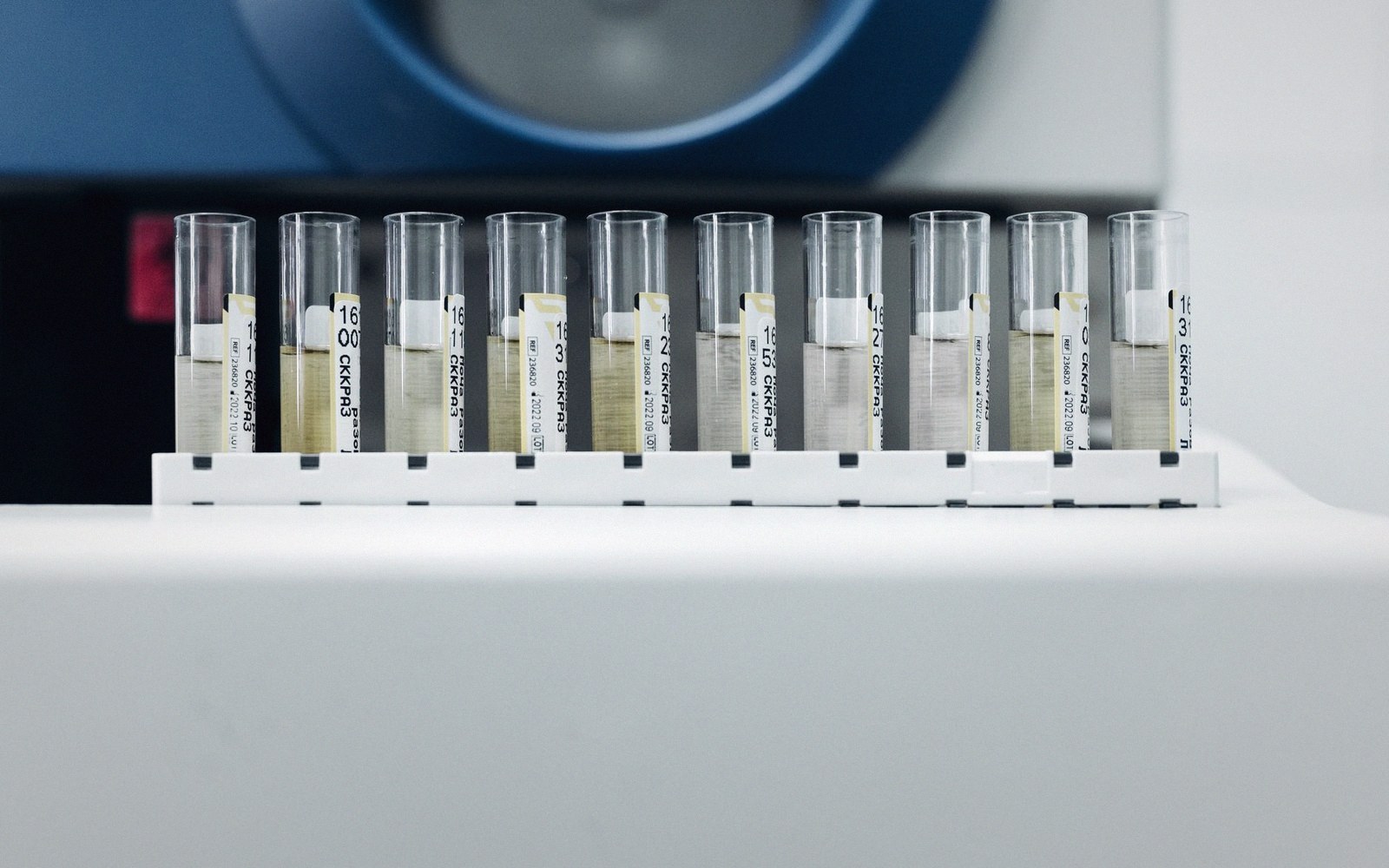
A diffusive badge waits for molecules to arrive; a pumped tube goes looking for them. A small battery-powered pump pulls air at a controlled flow rate — typically between 20 and 200 millilitres per minute — through a glass or stainless-steel tube packed with sorbent. Run the pump for a measured period, multiply flow by time, and you have a precise sample volume. That volume is the denominator: divide the mass recovered from the tube by it, and you have a concentration.
The sorbent does the real work. Tenax TA is the workhorse for volatile and semi-volatile organics — a porous polymer resin stable at the high temperatures needed to drive compounds back off during thermal desorption. Carbograph and Carbopack grades extend the range downward to lighter, more volatile compounds that Tenax alone would not retain. For some analytes, tubes are packed with two or three sorbent layers in sequence, each catching a different fraction of the target range.
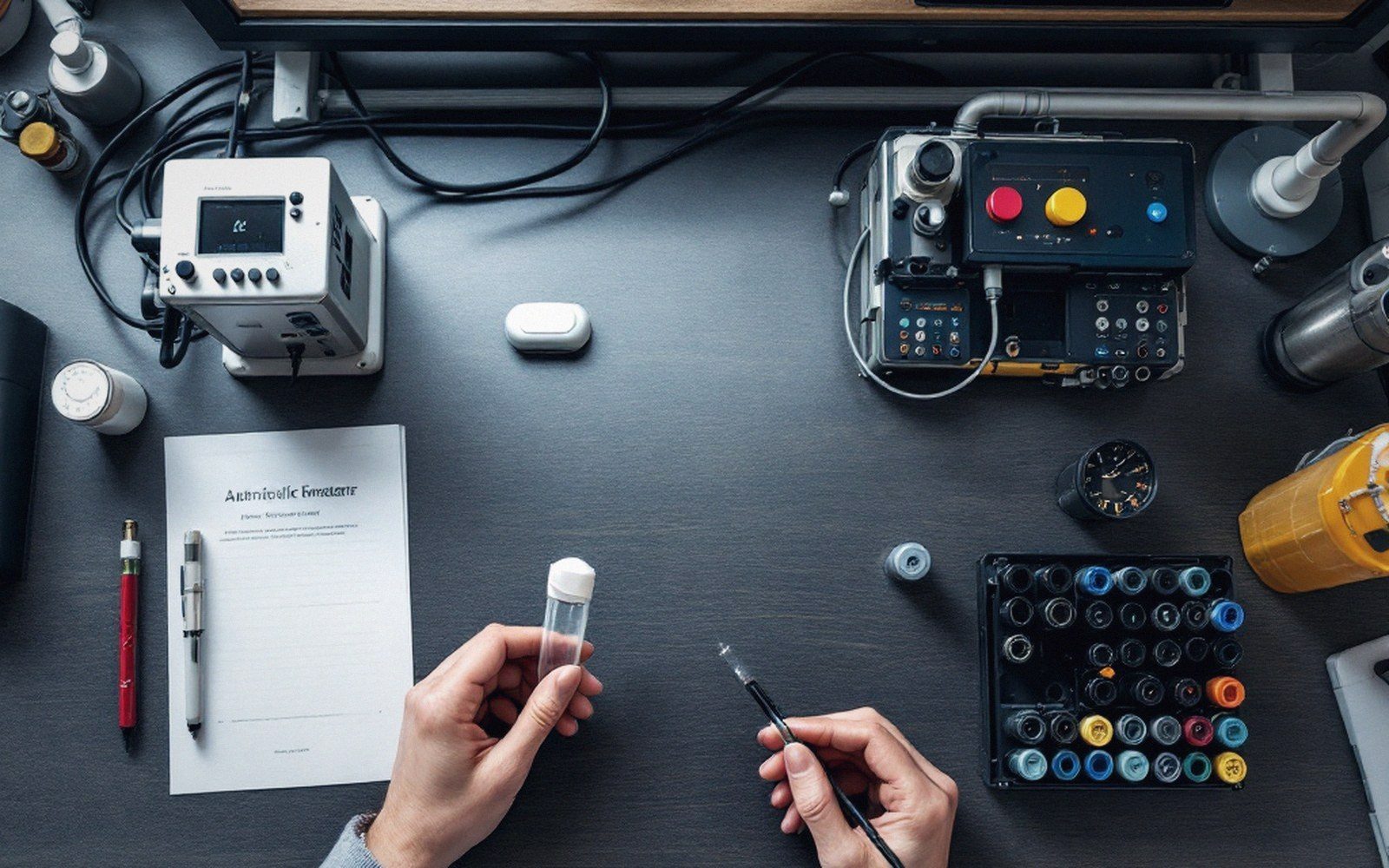
Flow rate is calibrated before the run, usually with a bubble meter or a certified electronic flow device, and checked again afterward. If the two readings diverge by more than the laboratory's stated tolerance — often five percent — the sample is flagged or rejected outright. Volume accuracy is what separates a pumped tube result from an estimate, so the calibration record travels with the tube all the way to the analytical report.
What the pump demands
The precision comes at a cost: the sampler is not passive. Batteries run flat, pumps drift, tubing kinks. Personal sampling pumps worn at the lapel for occupational exposure assessments have been refined over decades precisely because field failure is the failure mode. Standard practice pairs each active sampler with a duplicate run and, critically, with a field blank — a sealed tube handled identically but with no air drawn through it. The blank accounts for anything that arrives via handling, transport or the sorbent itself, rather than the target air.
Sampling duration is a design decision. A short run captures a snapshot; a longer run — sometimes an entire eight-hour shift — time-averages the concentration across a period. Neither is wrong, but they answer different questions, and the report should state which question was being asked.
Once sealed, capped with brass or PTFE fittings and logged into the chain of custody, the tube goes to the laboratory. What happens there — thermal desorption, column separation, detection and integration — is a sequence with its own failure modes and its own corrections, but it starts here, in the field, with a pump running at a known rate for a known time.
Filed inSection 01 — The Field