Section 02 · The Chamber E-11
Sink Effects
Surfaces that absorb and release later, blurring the measurement.
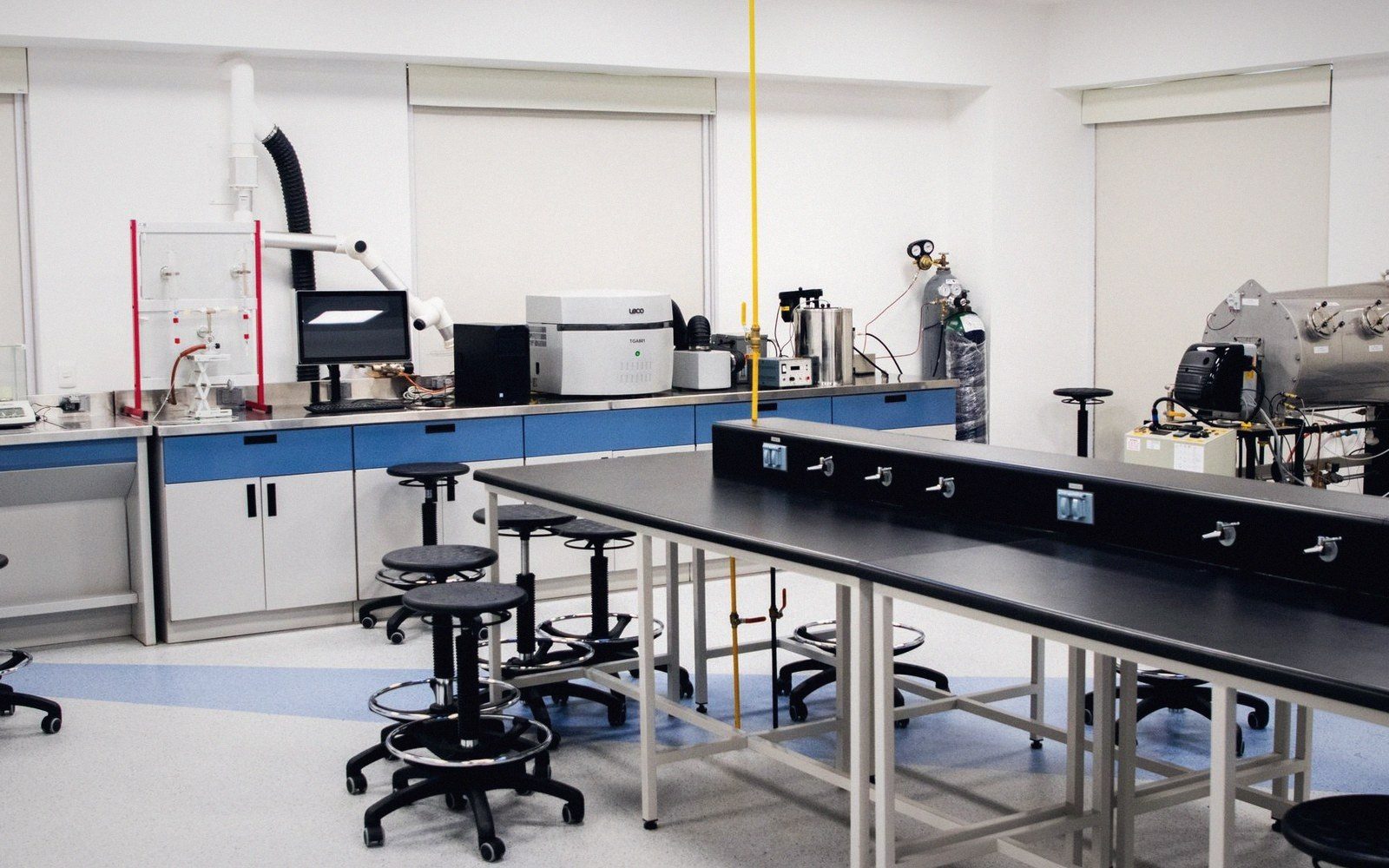
When the chamber walls absorb and give back
A sealed test chamber is supposed to isolate a single emitting specimen — floor material, adhesive, panel product — so that every volatile compound detected in the sampled air can be attributed to it. Sink effects complicate that assumption. Any surface in the chamber that adsorbs a compound and releases it later is acting as a sink: it removes analyte from the air during exposure, then bleeds it back when conditions change, blurring both the emission rate and the time profile.
The mechanism is straightforward. Airborne molecules partition between the gas phase and solid surfaces according to each compound's vapour pressure, polarity and the surface chemistry of whatever it contacts. Stainless steel — the standard material for precision test chambers under ISO 16000-9 — is chosen precisely because it is relatively inert and easy to clean, but it is not immune. At low concentrations, polar compounds and high-boiling-point substances can still adsorb onto chamber walls, seals, sampling fittings and even the surface of the specimen holder itself. Tenax-based sampling tubes catching the outlet air will not record what the chamber is temporarily holding.
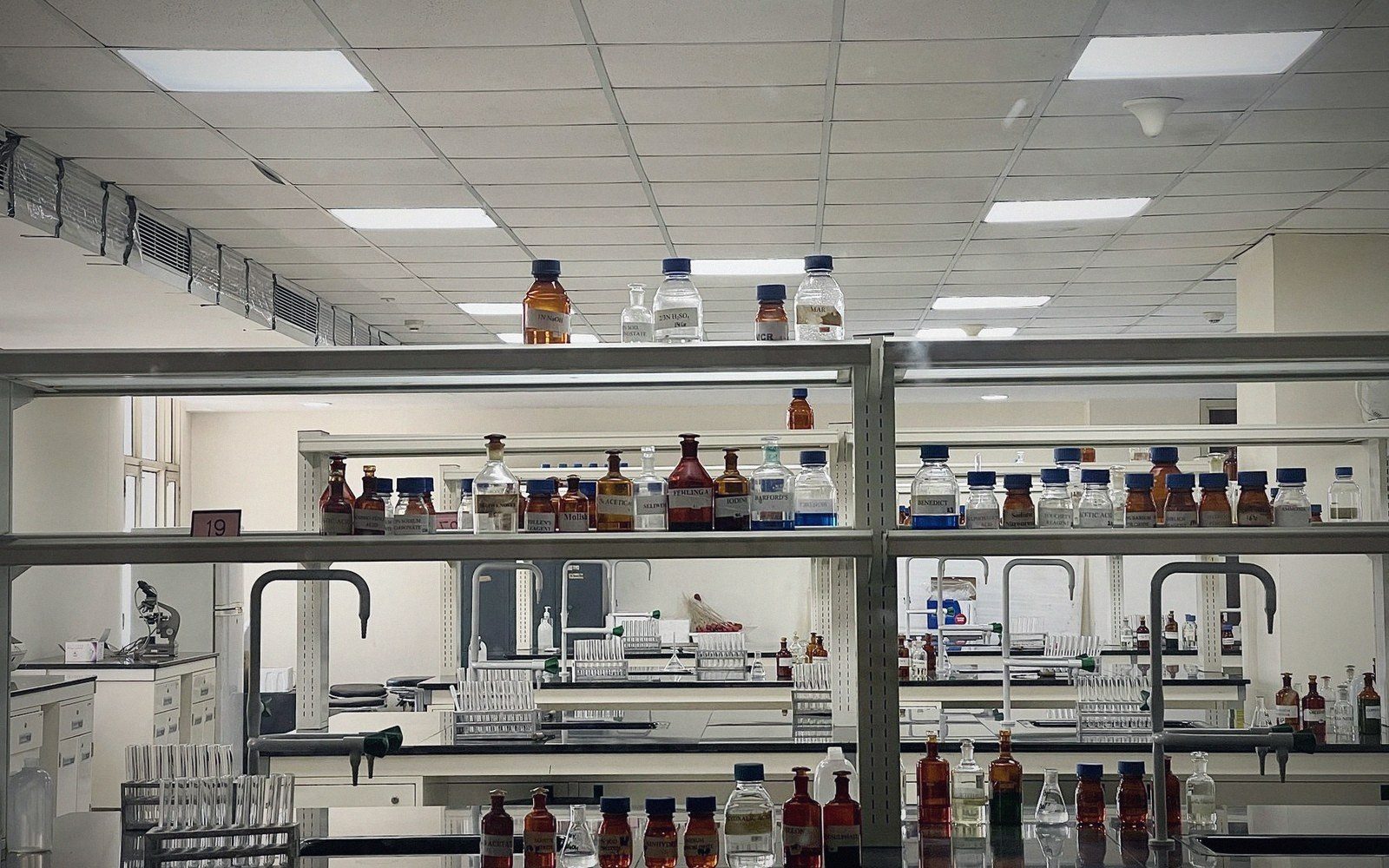
The practical consequence is a measured concentration that lags behind the true emission rate. Early in a test, the chamber sinks are still filling; the reported concentration is lower than it should be. As emission from the specimen slows, the sinks begin to outgas, and measured values fall more slowly than the real emission rate warrants. The result is a smoothed, distorted curve — which matters acutely when the whole purpose of the test is to characterise how emission falls with time.
Sink effects scale with surface-area-to-volume ratio: a small chamber has proportionally more wall relative to air than a large one, so the distortion is worse. Temperature matters too — higher temperatures reduce adsorption, which is one reason test conditions are tightly standardised. Pre-conditioning the chamber by running it at elevated temperature and flushing it before each test removes residual contamination from prior runs, but cannot eliminate partitioning onto surfaces during the test itself.
Correction is possible in principle: if the chamber's adsorption characteristics are independently measured, a mass-balance model can recover the true emission rate. In practice this requires additional experiments, and it only matters for compounds that partition strongly enough to make the correction significant. Most standard test reports note whether sink effects were evaluated; if that section is absent, the reported area-specific rate carries an unquantified downward bias in its early time points.
Filed inSection 02 — The Chamber